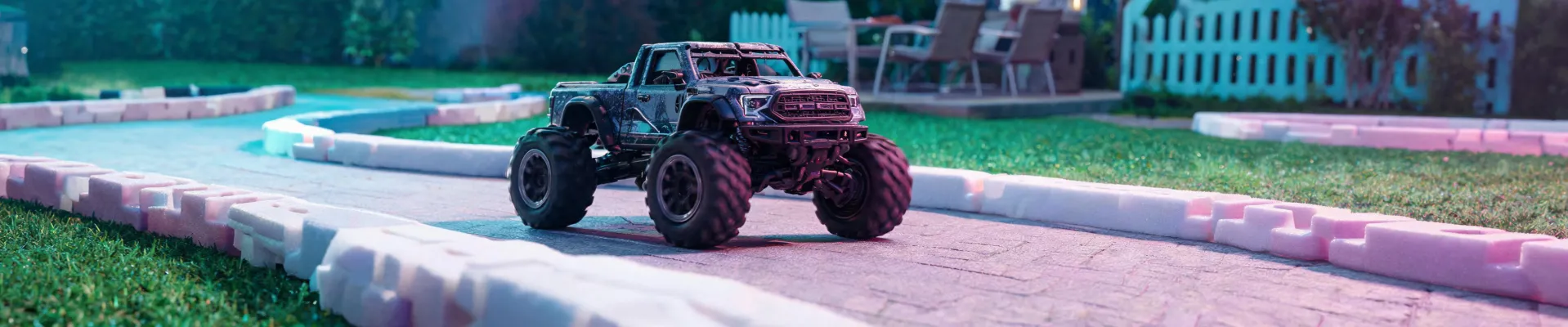
Arrma Vorteks 223s BLX: A Brushless 4x4 Worth Buying Only If You Keep the Care Routine
Posted on 2026-09-04 by Miriam Adler
The Arrma Vorteks 223s BLX is fast, waterproof, and fun—but the spec sheet will not tell you whether it is the right first brushless truck for you. The real test is whether you will dry it, inspect it, and store it properly after a messy run. That maintenance test, not speed, should shape the buying decision.
The Real Question: Do You Need a BLX 4x4 Truck, or Just a Faster Toy?
Picture the moment after your first real bash session, because the decision starts there. You have spent a Sunday afternoon running the Arrma Vorteks 223s BLX through wet grass and a dirt lot; the truck is coated, the connectors are humid, and you are tired. Do you spend the next fifteen minutes cleaning and drying it, or do you gamble that a skipped cleaning will not matter? That is the true choice this truck puts in front of a first-time brushless buyer—not whether the motor is fast or the chassis durable, but whether you will hold up your side of the ownership bargain. Here is what the spec sheet does not say: a Vorteks that lasts and one that wears out differ most in the condition of its bearings—and that condition is a direct report card on the routines you kept. Every other thought in this guide follows from that fact.
The real conflict is not speed versus price; it is capability versus ownership burden. A cheaper brushed truck is simpler to repair, less nerve-wracking when you leave it damp by accident, and easier to hand to someone who will not treat equipment kindly. The Vorteks, by comparison, costs more, brings a stricter maintenance routine, and punishes neglect faster. That is the honest trade: you are not just paying for a brushless motor and four driven wheels—you are accepting a contract that says every dirty or wet run gets a cleanup before storage. If you ignore that contract, the truck will not fail dramatically next week; it will fail quietly in bearings and connectors a few months later.
So the criteria you really need are not printed in the brochure. Ask yourself how much time you can spend after each run, where that run happens, whether you actually enjoy the small ritual of washing and inspecting, and how many seasons you expect from the vehicle. If you have a yard that turns to mud and a schedule that barely leaves room for dinner, your answer will differ from someone with a garage, an air compressor, and a genuine love of tinkering. Speed figures tell you nothing about that; they only tell you what the truck can do when it is dry and healthy. Let those questions become the filter you apply before your credit card gets involved.
The Vorteks Promises, and the Fine Print Beneath Them
Start with what the Vorteks 223s BLX actually promises. The BLX brushless system delivers instant punch and holds it across the whole run, without the drop-off a brushed motor shows when batteries fade. The 4x4 drivetrain turns that punch into cornering grip, so you can accelerate out of a turn instead of spinning away. It is a bashing truck, not a race buggy: the chassis, shock towers, and suspension are built to tolerate jumps, rollovers, and less-than-perfect landings. In everyday terms, your first brushless experience feels controlled and durable rather than twitchy and fragile. That durability under abuse is what separates a basher from a shelf queen.
The promises come with a second layer that the box art never shows. After a typical run through a park, the Vorteks returns with grass wrapped around the shock shafts, dust packed into the wheel wells, and—if the grass was even slightly wet—moisture sitting in places you cannot see. The same power that makes the truck fast also throws debris harder into the chassis. The same grip that makes corners exciting means water and grit get flung along the drivetrain. That is not a flaw; it is the physical trade for high performance. Accept it before you buy, and the Vorteks stops being an impulse purchase. Nothing about the truck is lying to you; the box just leaves out the part where the fun ends and the care begins.
The maintenance cost is mostly time and consistency: ten or fifteen minutes to blow off loose debris, dry the electronics compartment, wipe down the chassis, and check the bearings and connectors. You also need to store the truck where it can air out, not sealed in a damp bag. Bearings are cheap; an ESC or motor that fails after repeated running in water is not. Those costs are predictable, which is good news—nothing about the Vorteks is a mystery if you accept that it is not a zero-maintenance toy. The hidden cost is not the price tag; it is the willpower to perform a short routine when you are tired and just want to go inside.
The Crash Course No Spec Sheet Covers: Post-Run Care
If the word waterproof on the box made you think the Arrma Vorteks 223s BLX can be hosed off and put away wet, you have absorbed the wrong lesson. Waterproofing here describes the electronics tolerance during a run—splash, rain, even a shallow puddle—not a license to leave a mud-caked chassis sitting humid overnight. The reason this matters is not speculation; a well-documented body of cleaning guidance from a very different product category shows what happens when moisture, residue, and neglect are left together. In that unrelated field, even a component that looks harmless becomes a breeding ground for failure once it is stored damp. The mechanism transfers directly to the Vorteks: water washes grease out of bearings, humidity works into connectors, and dirt holds moisture against metal until corrosion begins. Treat post-run drying as part of the run, not an optional extra.
The cleaning routine is simple, but it follows a sequence the evidence treats as non-negotiable: wash away loose debris, dry every compartment that got wet, then inspect the parts that move and carry current. In one widely cited cleaning protocol from 2017, the guidance shifted from a casual wash-when-dirty approach to a defined clean-and-inspect cycle after every use, because failure does not announce itself in advance. The same logic applies here. If you run the Vorteks in damp grass or dust, you are creating exactly the condition the evidence warns about: residue plus moisture inside a sealed environment. The truck will not feel different the next morning; damage happens slowly in the bearings, the connector pins, and the motor shaft. The real spec you are buying is not top speed but the willingness to dry the truck after every wet run.
Transfer that lesson to the Arrma Vorteks and you get a concrete failure map. The part that fails first is rarely the ESC or brushless motor; those electronics are usually well protected. It is the drivetrain bearings: when water gets into the wheel hubs and gearboxes, it washes away the factory grease, rust starts on the races, and soon you feel roughness when you spin the wheels by hand. Ignore that, and a small part turns into a bigger repair when the hub or differential takes damage. The connectors are the second weak point because corrosion grows where humidity parks itself, especially if the truck sits in a garage or car trunk. None of this makes the Vorteks fragile; it makes it a normal high-performance machine whose lifespan is set by whether the dry-and-inspect step is a habit or an exception.
Your Situation as the Make-or-Break Criterion
Now bring your own life into the decision. How long is a typical run—twenty minutes on a dry lot or a whole afternoon in a wet field? How much comes home with the truck? If you run on pavement or a dry dirt track, dust is your main enemy; if you run on grass after rain, moisture is your main enemy. The tougher condition is the one that forces the routine. Think honestly about the hour after the run: can you spend fifteen minutes with a blower and a rag, or does the truck sit in the back of the car until the weekend? There is no wrong answer for the person, only a wrong answer for this particular truck. A slower brushed 4x4 will forgive a skipped drying night far more easily; the Vorteks will remember every bit of neglect. That is why your habits, not the truck spec, decide whether this purchase feels smart six months from now.
Power and upkeep are linked in a way that buyers tend to ignore. In almost any machine, the maintenance interval shrinks as performance grows. Guidance from well-maintained consumer equipment makes the point: devices operated in higher-risk conditions need proportionally more frequent care. That means the owner who would happily dry a slow brushed truck once a month will find the Vorteks demands care after every wet run—not because the manufacturer is fussy, but because brushless power pushes the drivetrain harder and wet grass pushes moisture deeper into the chassis. You can either adjust your environment by choosing dry running days, or adjust your behavior by building the fifteen-minute ritual. The one option that fails is to buy the extra speed and keep old careless habits.
So which buyer are you? If you read those last paragraphs and felt a small thrill at the idea of a structured post-run session, the Vorteks is probably the right jump into brushless ownership. If you felt a sinking feeling, take that as data rather than judgment: you value simplicity, and a slower truck that tolerates neglect will make you happier over a full season. It is also worth remembering that nobody fails this test permanently. A simple tire blower, a spare body clip, and a short checklist can turn the chore into a two-minute habit that happens before you even take your shoes off. The real question is whether you will do it when nothing is broken yet. That future moment, when the truck still looks fine, is where the entire decision is won or lost.
The Verdict and the Rule That Gets You There
Here is the conditioned verdict: buy the Arrma Vorteks 223s BLX if you are willing to make a ten-to-fifteen-minute post-run routine the last step of every bash session; skip it if you know in advance that you will not keep that promise. I would call this truck one of the most sensible first brushless 4x4s you can buy, not because it is perfect, but because its weaknesses are predictable and its care routine is small. A season of ownership will prove the point: the Vorteks that still runs like new is not necessarily the one that was crashed least; it is the one that was dried and inspected most. There is no shame in either choice, but there is waste in paying for brushless speed and then losing it to a bearing failure that a blower would have prevented.
The boundary conditions are just as clear. If you run only on dry pavement and store the truck inside, you can relax the cleaning interval and still expect a long life. If you buy it for wet-grass bashing and then leave it wet overnight, no amount of brand quality will save the drivetrain. The bearings will need occasional replacement—normal wear, not a design flaw. The body will pick up battle scars, and if you dunk the truck in a pond, the waterproofing has limits. Accept those conditions and the Vorteks stays inside what it is: an honest, fast, sensible first brushless truck. Fight them, and every defect will feel like the manufacturer fault when it is actually the physics of water and steel.
Turn that decision rule into a reusable audit for every future RC purchase. Before you hand over your card, ask what the required routine between runs is, and whether you will actually do it. If the second answer is no, the most impressive specs will not save you from disappointment. The right vehicle is not the most powerful one; it is the one whose maintenance burden matches the life you genuinely lead. The Vorteks is a clear example: predictable power, predictable weaknesses, and a rule that keeps working long after the new-car smell is gone. That short audit will serve you better than any review, because it is built from your own habits rather than a stranger opinion.
A year from now, two Vorteks owners will compare trucks at the same parking lot. One will be on its second set of bearings and still pulling hard; the other will be nursing a grinding drivetrain and blaming the brand. The truck was never the variable. The routine was. Keep that rule, dry the car, and the right decision stays obvious.

Miriam Adler
Miriam Adler is an educational and STEM toy analyst specializing in busy boards, Montessori-style manipulatives, learning towers, sound books, reading pens, pretend-play sets, and early learning toys. She applies ASTM F963 and IEC 62115 methods while evaluating small-part hazards, accessible edges, switch durability, sound output, battery access, pull force, and age-appropriate task complexity. Her work helps parents, retailers, and product teams choose learning products that align developmental goals, supervision needs, interaction design, and the intended age stage.
Leave a Reply