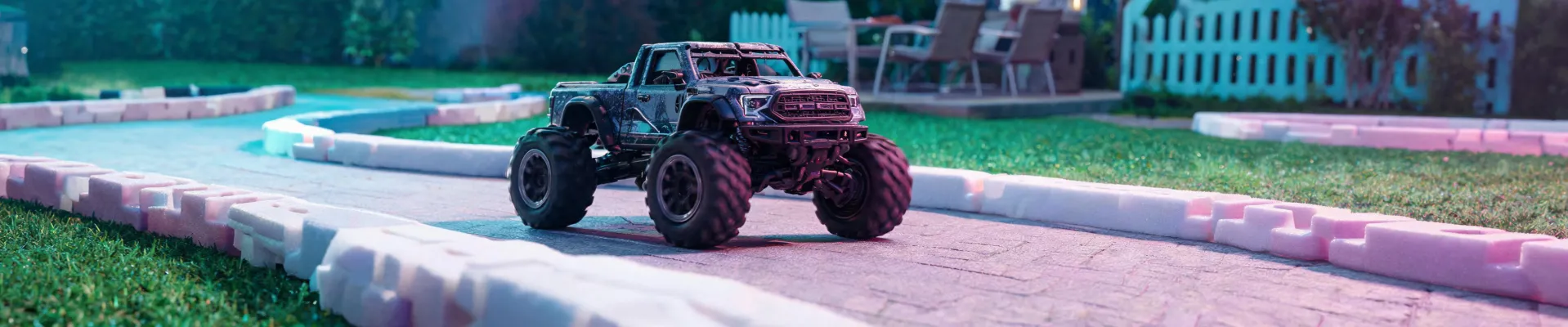
Arrma Vorteks 223S BLX 4x4 Review: A Brushless Truck for Owners Who Clean
Posted on 2026-09-16 by Miriam Adler
-
Clean Truck or Fast Truck? The Vorteks BLX Decision Is About Maintenance
-
What the Vorteks 223S BLX 4x4 Actually Asks of You
-
After the Run, the Real Purchase Begins: The 15-Minute Routine
-
The First 3-Months Rule: When Strict Care Pays Off and When It Can Ease
-
Speed You Can Maintain Beats Speed You Barely Handle: The Vorteks Verdict
Buy a truck because it is fast, or buy one because you will keep it fast? That is the choice hiding inside the Arrma Vorteks 223S BLX 4x4 Brushless RC car. A brushless 4x4 promises power; it does not promise the fifteen minutes of cleaning after a muddy run. Treat the Vorteks as a one-time purchase and you will skip care, and the reliability will die in storage. Treat it as a system—vehicle plus after-run ritual—and you get what you paid for. The model number tells you about the drivetrain; the missing information is about you.
Clean Truck or Fast Truck? The Vorteks BLX Decision Is About Maintenance
Stand in front of the Arrma Vorteks 223S BLX 4x4 and your eye goes straight to the name: brushless, 4x4, BLX. But a first brushless buyer is not choosing between the Vorteks and another truck; they are choosing between two versions of themselves. One buys the strongest platform reachable, runs two packs through grass, and parks it with the motor warm. The other budgets time for the wheels-off, chassis-out inspection after every wet or dusty afternoon. The fork is genuine because one drivetrain cannot serve two levels of neglect. Ask which image repeats over a year: open throttle on a clean field, or you with a brush picking grass out of the suspension. If the second sounds like part of the hobby, the 223S BLX fits. If it sounds like work, no spec sheet will close that gap. Which version you bring home decides whether this Arrma is a smart first truck or a very fast shelf piece.
Here is where much of the writing about RC ownership goes wrong: it treats a fine brushless platform as if it fails only when a part is weak. The harder lesson from equipment-care literature is that residual matter left on stored gear becomes the next failure. A component can look dry and still carry a film of moisture or grit, and that film does its damage in the hours after you walk away. In the Vorteks, grass packed behind the skid plate or muddy water along the slipper clutch is not cosmetic; it is a failure precursor. Clean the chassis before storage and you reset the clock. Leave it and you hand the truck a slow-acting fault. The insight relocates reliability from the factory floor to your garage, and it draws the boundary: if you run only on clean, dry pavement and dry the car the same day, the risk falls. Introduce wet grass, dust, or standing water and the rule snaps back. That condition makes the after-run routine part of the spec, not an accessory.
What the Vorteks 223S BLX 4x4 Actually Asks of You
Before money moves, match the Arrma Vorteks 223S BLX 4x4 to the surface you actually have and to the minutes you are willing to spend. A spec sheet is a promise; your backyard is a fact. The most dependable voices are independent testers who buy their own sample, run it on real grass and dirt, and publish failures as well as wins. When testers fund their own hardware, they have no reason to hide the maintenance burden, so their verdict tells you what the truck demands after a session. If independent testing shows that heavy grass clogs the chassis or wet bearings wear early, that outweighs any marketing speed figure. Use it as a filter: does the Vorteks' real demand fit your schedule? If no, the truck may still be excellent—just not excellent for your terrain and free time. The rule is conditional by design; it does not say avoid the truck, it says let your actual conditions do the rejecting.
Peak power has a way of making every other question small, which is why transparent review ecosystems matter more than the sticker. Good testers tell you which parts wear first and which cleaning step prevents it, because they face the disassembly themselves. That same transparency should guide your support check: are spare parts orderable, are diagrams available, and does an official after-run guide exist? When a manufacturer puts care steps in writing, you buy a system with guardrails. When those guides are absent, you inherit the guesswork. A brushless 4x4 is a machine you will work on, not just drive, so independent sources that buy their own products and publish failures change the question from 'how fast is it?' to 'how well can I keep it fast?'. That is the question predicting satisfaction in month six, and marketing copy cannot answer it.
After the Run, the Real Purchase Begins: The 15-Minute Routine
High-exposure running—the grass-and-mud kind the Vorteks 223S BLX was built for—triggers a rule that overrides shortcuts: clean after every session, not when the truck looks dirty. A documented failure mode shows contamination hiding on stored gear and causing serious failure while the equipment looked dry; the surface gave no warning while the damage moved deep. Translate that to a brushless truck and the parallel is exact. After a wet grass run, water beads inside the chassis and mixes with vegetation. By the time the car sits in the trunk looking dry, that film is attacking bearings, slipper clutch, and seals. The condition under which you may skip the full clean is narrow: a short run on dry, clean pavement with no moisture in the drivetrain and time to air the car. Outside that, the after-run clean is not a chore squeezed into the evening; it is the moment deciding whether your 223S BLX still spins freely next month. The burden of proof is on the truck, not on you: dirty means clean it now.
What actually happens when you store a dirty Vorteks overnight? Ask ten owners and you will get ten answers—some blow off dust, some wipe tires, most do nothing. That missing protocol mirrors a lesson from care history: when no official procedure existed, contamination found the gaps, and it took a visible consequence to force written rules. The uncomfortable question is whether your truck will need to fail before you adopt routine. If you park after a muddy pack and leave the chassis damp, the clock is running—corrosion on the motor plate, grit in a steering link. A written after-run sequence—wheel off, chassis rinse, bearing dry, light oil—exists not because the car is delicate but because failure is predictable. In years before such protocols were standard, too many owners learned that 'looks dry' is not 'is dry.' The evidence reframes storage as the beginning of the next run, and the truck's condition when it goes in determines whether that next run happens.
The First 3-Months Rule: When Strict Care Pays Off and When It Can Ease
Care literature offers a clear frequency rule for sensitive, high-use equipment: when the item is new, when it serves a high-risk user, or when the owner is still learning its limits, cleaning frequency must be higher than later. Guidelines for delicate systems recommend extra deep-cleaning at least once a day during the early fragile period, because small oversights compound. Translate that to a fresh Arrma Vorteks 223S BLX 4x4: the first three months are the break-in window. You are still learning how the truck sheds heat, how grass nests in the arms, how much water a normal run pulls into the chassis. During that window, hold the every-session cleaning line and inspect the drivetrain; visible mud is not the cue. Once the car has performed steadily through several cleanouts, the strict early standard has done its job. The evidence changes the schedule from 'when it looks dirty' to 'every session during the first three months.'
Once stability is observed—consistent handling, no odd sounds, predictable cleaning needs—you can switch from a calendar-driven routine to condition-based checks. But the first stage is not skippable. Guidance for new equipment says before first real use, clean and inspect every part that touches working fluid; that initial pass reveals factory residue or shipping debris. Do that with the Vorteks: wipe the chassis, check the motor area, spin each wheel and feel for drag. Then run the first pack on clean, dry ground and examine what came off. After a few sessions with steady performance and no water ingress, relax to condition-based care—full clean after wet or dusty runs, a quick blow-off after dry ones. The condition that ends strictness is evidence of stable behavior, not a date; the condition that restores it is any run where the truck is visibly wet or covered in debris.
Speed You Can Maintain Beats Speed You Barely Handle: The Vorteks Verdict
Now pull the two halves together. The Arrma Vorteks 223S BLX 4x4 is a well-built brushless platform; the power is real, and the handling justifies the attention. But equipment history repeats a warning: when no official care routine existed, the failures that followed were not random; they came from residue left to settle. The vehicle that lasts is not the one with the strongest motor, but the one whose owner treats the after-run check as part of the drivetrain. That makes the recommendation compound. If you commit to a strict early protocol and then move to condition-based maintenance, the 223S BLX is sound for a first-time brushless buyer. If you want set-and-forget power, the honest advice is a simpler truck that tolerates your neglect. The evidence does not rate one vehicle; it sorts buyers into two groups—those for whom the truck delivers consistent runs, and those for whom it becomes a very fast lesson in cleaning.
Before you spend, apply the rule in one deliberate exercise. Name your ground truth: the surface where you will run, the number of battery packs per outing, and the minutes you are honestly willing to give to after-run care. Then measure the Vorteks against that statement rather than against quoted speed. The rule is plain: choose the truck whose maintenance you will actually perform. If that is the Vorteks—clean pavement, short sessions, or a genuine fondness for the wash-down ritual—buy it without apology. If the honest answer is that a simpler rig would get cleaned more often, make that your choice. Whichever way you lean, take time to read independent teardowns and owner logs. Sources that disclose how testing is funded are the reliable ones; independent signal beats ad copy. That transparency keeps your rule honest, because the people describing long-term wear have their own money and reputation in the review, not a sales quota.
The useful bottom line is a clause, not a speed figure. Buy the 223S BLX 4x4 only if you can answer yes to the question the chassis asks every time it runs: will you clean it before it sleeps? A yes means the brushless performance in this Arrma belongs to you. A no means the purchase already includes a failure scheduled for later. Until the yes comes without a wince, keep looking for a truck whose care time fits the life you have. When the after-run ritual feels like part of the hobby rather than a tax, you have the right 4x4—and it may well be this one.

Miriam Adler
Miriam Adler is an educational and STEM toy analyst specializing in busy boards, Montessori-style manipulatives, learning towers, sound books, reading pens, pretend-play sets, and early learning toys. She applies ASTM F963 and IEC 62115 methods while evaluating small-part hazards, accessible edges, switch durability, sound output, battery access, pull force, and age-appropriate task complexity. Her work helps parents, retailers, and product teams choose learning products that align developmental goals, supervision needs, interaction design, and the intended age stage.
Leave a Reply